
Introduction
In today’s world, trends change in the blink of an eye, and social media makes it easy to stay “on trend.” But what’s driving this rush? Cheap, disposable fashion has become the norm, offering new styles every season at bargain prices. But behind every $6 shirt or influencer haul, there’s a huge environmental cost. Fast fashion has redefined how we shop; customers began prioritizing speed and low cost over sustainability. This article will explore the troubling cycle of overproduction and overconsumption, hurting our planet, and why it’s time for a change.
What is fast fashion?
Fast fashion refers to the rapid production of inexpensive clothing that imitates current fashion trends. Companies like Zara, H&M, Forever 21, and Shein release hundreds of new styles every week, designed to be worn a few times and then thrown away. According to Vogue, this model relies on a low-cost, high-volume system, utilizing cheap labor and synthetic materials to keep prices low. In the process, fashion is no longer seasonal; it’s instant, and our closets have become revolving doors.
But this convenience comes at a staggering cost to both people and the planet.
The Problem: Overproduction and Overconsumption
The fast fashion model thrives on overproduction. Brands deliberately manufacture more than needed, knowing that constant novelty drives sales. Consumers are buying more, too: 60% more clothing today than 15 years ago, and each item is kept for half as long (McKinsey & Company). This leads to a vicious cycle:
- More production → More consumption → More waste.
We treat clothing like it’s disposable, not durable. And where does all that discarded clothing go?
The Environmental Consequences of Overconsumption
Overconsumption isn’t just about clothing, it’s a reflection of a culture addicted to convenience. When we treat clothing as disposable, deforestation, carbon emissions, and biodiversity loss occur.
- Did you know?
- The fashion industry is responsible for 10% of global carbon emissions. That’s more than all international flights and maritime shipping combined.
- Vast tracts of land are cleared for cotton farming, often using pesticides that degrade soil and poison local ecosystems.
- Microplastics from synthetic fabrics now account for 35% of microplastics in the ocean (IUCN), harming fish, seabirds, and eventually us.
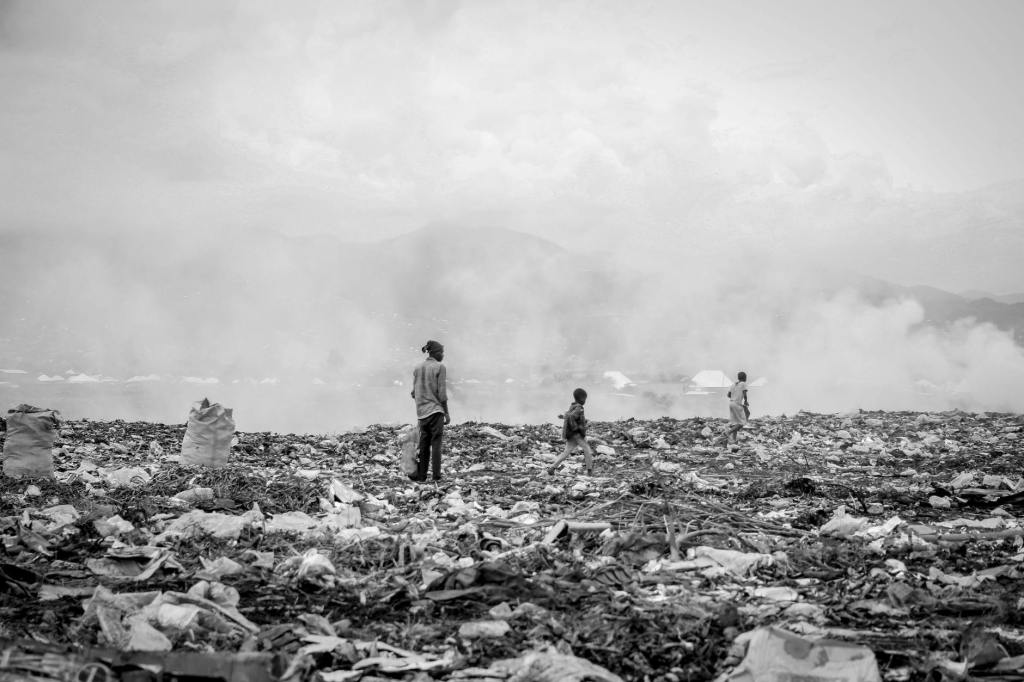
In Ghana’s Kantamanto Market, 15 million garments arrive weekly from Western nations. Many are damaged or unusable, turning African communities into the world’s dumping grounds for fast fashion’s waste (ABC News Australia).
This is no longer a fashion crisis, it’s a climate crisis. Overconsumption doesn’t just affect our wallets, it’s taking a huge toll on our planet.
Landfills, Waterways, and Global Waste Sites
In 2018, 11.3 million tons of textile waste were disposed of in U.S. landfills, an immense amount of waste (Environmental Protection Agency (EPA)). Globally, the industry produces 92 million tons of textile waste yearly (Earth.org). That’s the equivalent of a garbage truck full of clothes being dumped every second.
Most of these clothes are made from synthetic fibers such as polyester, which take up to 200 years to decompose. While they sit in landfills, they leach microplastics into soil and waterways, polluting marine ecosystems and entering our bodies through the food chain.
Even worse, unsold inventory often isn’t donated; it’s burned or shredded. In 2022 alone, H&M was found to have destroyed 60 tons of new clothing to protect brand value, despite sustainability pledges.
A Thirsty Industry
Fashion is one of the most water-intensive industries across the nation.
- It takes 2,700 liters of water to produce just one cotton T-shirt: enough to provide one person with drinking water for 2.5 years (World Wildlife Fund).
- The dyeing process contributes to 20% of global industrial water pollution (United Nations).
- Toxic chemicals used in dyeing, such as lead, mercury, and arsenic, are often dumped into rivers, harming aquatic life and communities downstream.
These numbers are not just statistics. They have a devastating impact on natural resources, disproportionately affecting communities in the Global South, where the majority of fast fashion manufacturing takes place.
The Human Cost: Who’s Paying?
Behind every $10 dress is a garment worker paid less than $3 a day, working in unsafe factories under exploitative conditions. Fast fashion has built its empire on the backs of underpaid workers, mostly women in Bangladesh, Vietnam, and Cambodia.
In 2013, the Rana Plaza collapse in Bangladesh killed over 1,100 workers and injured 2,500 more. It exposed the dark underbelly of the industry: unsafe buildings, no labor protections, and complete disregard for human life.
Despite global outrage, little has changed. Labor watchdog Clean Clothes Campaign reports that 93% of fashion brands still don’t pay their garment workers a living wage.
The Solution: Reduce, Reuse, Rewear
The antidote to fast fashion isn’t complex. It starts with reducing what we buy and reusing what we already own.
According to the Ellen MacArthur Foundation, extending the life of clothing by just nine months can reduce its environmental impact by up to 30%. That means repairing jeans instead of replacing them, wearing the same dress more than once, swapping clothes with friends, and supporting secondhand and vintage sellers. Reuse is resistance. It’s a direct challenge to the culture of waste that fast fashion depends on.
Apps like Depop, Poshmark, and ThredUp make secondhand shopping easier and accessible. Communities nationally are embracing clothing swaps, upcycling, and sustainable brands that prioritize ethics and durability.
Policy and Corporate Responsibility
Individual choices matter, but this is also a systemic issue. Some governments are beginning to step up:
- France banned the destruction of unsold clothing in 2022, requiring retailers to reuse, recycle, or donate instead.
- The European Union’s Circular Economy Action Plan aims to make clothing more durable, repairable, and recyclable by 2030.
Corporations must be held accountable. Greenwashing, defined as brands that act to be sustainable while continuing harmful practices, is rampant. Consumers must demand and search for transparency, traceability, and fairness.
Conclusion: We Are Wearing the Cost
Fast fashion is not just a wardrobe choice, it’s a global crisis disguised as convenience. For every $6 shirt, someone pays. A child drinks poisoned water. A mother inhales toxic dye. A worker sews for 16 hours in silence. A river turns red.
This is not just fabric, it’s fossil fuel, blood, and water stitched together in the name of speed.
Livia Firth said it best: “Fast fashion is like fast food. After the sugar rush, it just leaves a bad taste in your mouth.” Cheap clothes come with invisible costs, ones that pile up in the landfills of Ghana, in the lungs of garment workers, in the dead zones of polluted rivers. And Lucy Siegle reminds us: “Fast fashion is not free. Someone, somewhere, is paying the price.” But it doesn’t have to be this way. We have the power to rewrite the narrative.
Change starts with what we do at the checkout line. Every purchase is a protest, and every refusal is a revolution.
As Emma Watson once said, “As consumers, we have so much power to change the world by just being careful in what we buy.” So let’s wield that power. Let’s mend instead of toss. Let’s swap instead of shop. Let’s wear our clothes, not just once, but until they carry stories, not just labels. Because the planet can’t stitch itself back together, it needs more consciousness. And it starts with you.
Sources
A New Textiles Economy: Redesigning fashion’s future | Ellen MacArthur Foundation
Dead White Man’s Clothes | ABC News Australia
Handle with Care | World Wildlife Fund (WWF)
Primary Microplastics in the Oceans | IUCN
Textiles: Material-Specific Data | Environmental Protection Agency (EPA)
The Environmental Impact of Fast Fashion, Explained | Earth.Org

 EcoTomorrow